V
Viola Etheridge
Guest
- Thread Author
- #1
A flash of glossy black streaks across your driveway before you can blink, and your heart skips a beat.
Black racers don’t wander into Florida yards at random. They follow shelter, shade, and snacks, and some leftover habits around your house put out all three without you meaning to.
A tidy-looking property can still send the wrong signals once you view it from a snake’s level.
Most homeowners overlook the same few spots. A weekend of work can change the picture, and none of it needs special tools.
You won’t turn your yard into a snake-free zone, and you shouldn’t try. You can make the odds of a surprise a lot lower.
Walk the perimeter with fresh eyes before the next big cleanup. The fix probably sits closer to your door than you’d guess.
© Florida Museum of Natural History – University of Florida
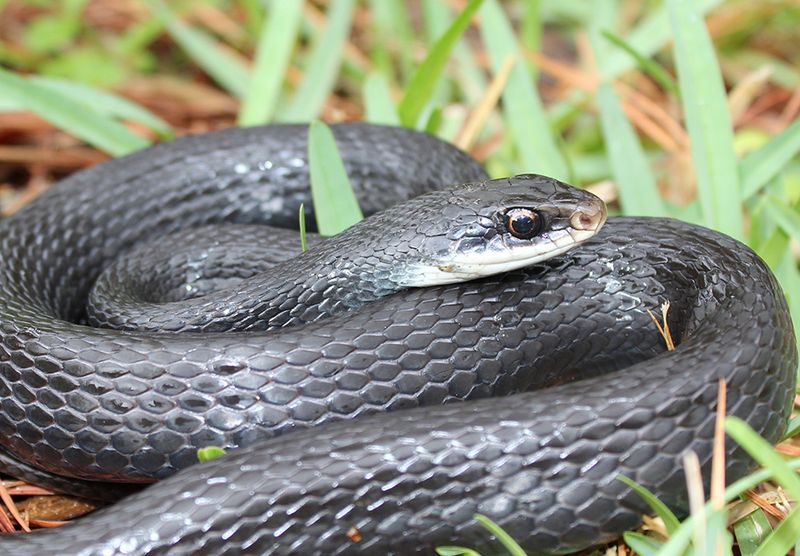
Picture a snake that looks like it was dipped in shiny black paint. That is the Southern Black Racer, and it lives in every corner of the state.
Folks in Central Florida see these snakes a lot, often near gardens, fences, and backyard edges. If you have spotted a black snake in your yard, odds are good it was a racer.
Adults are long and slim, usually 3 to 5 feet, and some grow even longer. Their backs shine like polished shoes, and their bellies are gray or pale cream.
Look closely at the face and you will notice a bright white chin and throat. That white patch is one of the easiest clues for telling a racer apart from other dark snakes.
Here is the part that calms many nervous neighbors. Black Racers are not venomous, so they are not the kind of snake that sends people to the hospital with a dangerous bite.
Fun fact for curious kids: young racers look totally different from their parents. Babies have gray bodies with reddish-brown blotches, and they slowly turn black as they grow up.
Knowing what you are looking at takes away a lot of fear. Once you can name the snake, you can make smart choices about your yard instead of panicking every time something wiggles.
© Owlcation
Owls hunt at night, but racers prefer the sunshine. Scientists call animals like this diurnal, which simply means they are busy during daylight hours.
That schedule explains why so many people bump into them. You are out watering plants or walking the dog, and the racer is out looking for lunch at the very same time.
Some snakes sit still and wait for food to wander close. Racers are different, because they go searching for their meals like tiny patrol officers.
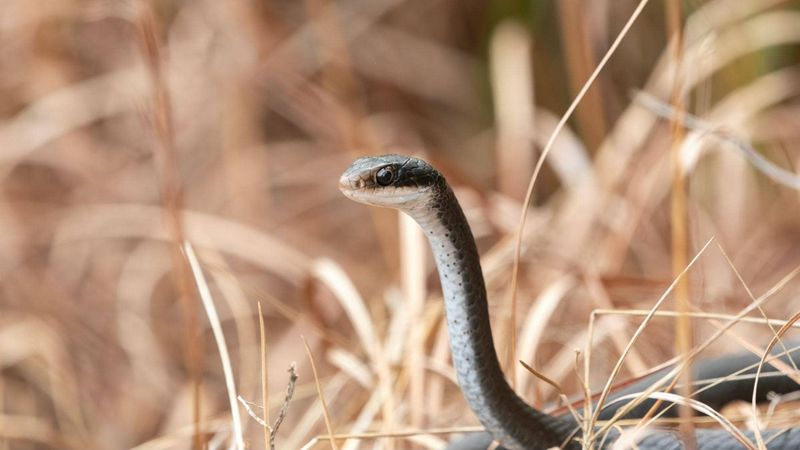
Watch one for a moment and you may see it lift its head off the ground. It does this to scan the area with its sharp eyes, looking for movement in the grass.
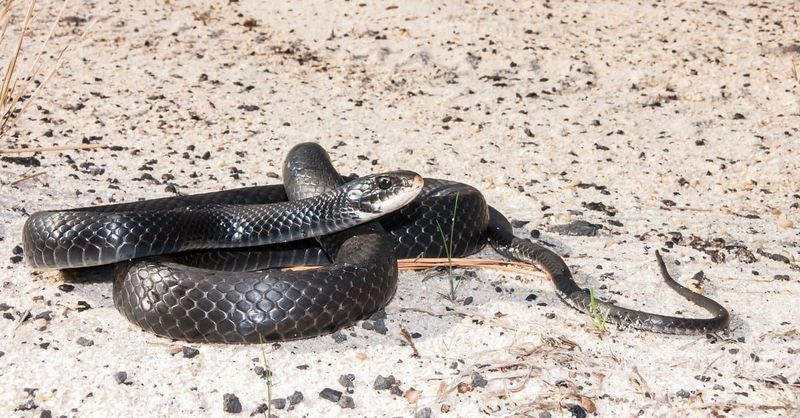
Their name comes from their speed, and they live up to it. When a racer feels watched, it often shoots away in a quick black blur.
So that sudden flash you noticed near the driveway was probably a racer trying to leave, not chase you. Seeing them often does not mean there are hundreds hiding nearby.
Use this daytime habit to your advantage. Do yard work with your eyes open, wear closed shoes, and glance ahead before reaching into plants or stepping over logs.
© A-Z Animals
Think of your yard as a restaurant, and the racer as a hungry customer reading the menu. If the menu looks good, the customer will keep coming back.
Black Racers eat a wide mix of small animals. Mice, rats, and moles are on the list, along with lizards, frogs, insects, birds, bird eggs, and even other snakes.
Because they eat so many things, racers can live almost anywhere food is plentiful. Gardens, wooded edges, ponds, and regular suburban yards all work fine for them.
Florida yards can be packed with anoles darting along fences and frogs singing near puddles. A busy crowd of small critters can draw a racer right to your doorstep.
That does not mean you need to chase every lizard away. Those little animals are part of a healthy yard, and racers actually help keep rodent numbers down.
The goal is balance. When food is spread out and not piled up next to your house, racers have less reason to hang around your porch and walls.
Take a slow walk around your home and ask yourself a simple question. Where are the small animals gathering, and what is pulling them there?
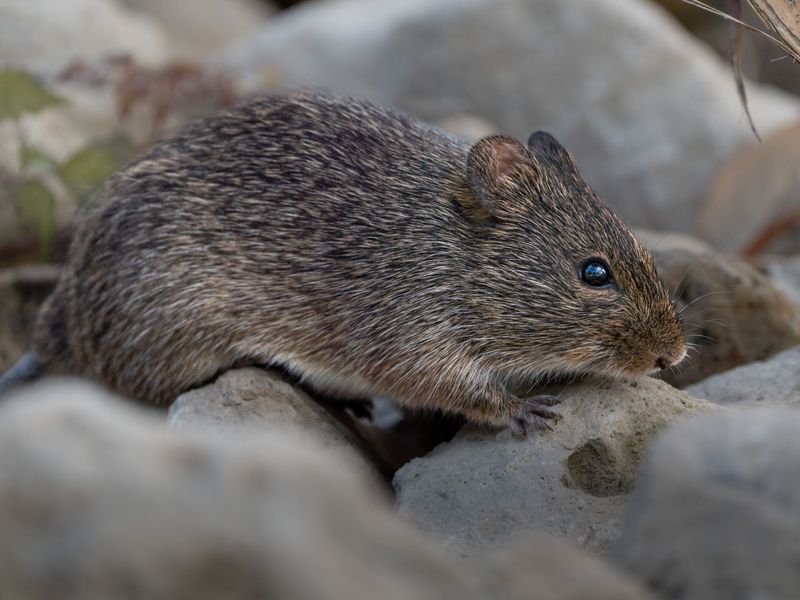
Image Credit: © Dmytro Koplyk / Pexels
Mice love a free meal, and Florida homes can accidentally serve one every single day. Spilled birdseed, open dog food bags, and crumbs near the patio all add up quickly.
Here is the chain reaction. Food draws rodents, and rodents draw snakes looking for an easy dinner.
Start with the bird feeder. Hang it well away from the house, especially in warm months, because fallen seed on the ground is a magnet for mice and rats.
Next, look at how you store food. Pet kibble, birdseed, and even extra snacks belong in hard, sealed containers that rodents cannot chew through.
Thin bags and cardboard boxes are easy for sharp little teeth. A sturdy bin with a snap-tight lid costs a few dollars and saves a lot of trouble.
Do not forget the attic, shed, and storage spaces. Clutter gives mice cozy places to nest, so tidy up and clear out what you do not need.
Feed pets indoors when you can, or pick up bowls after mealtime. Leftover food sitting outside overnight is like leaving the restaurant doors wide open.
When the rodent buffet closes, racers usually move on to find meals somewhere else.
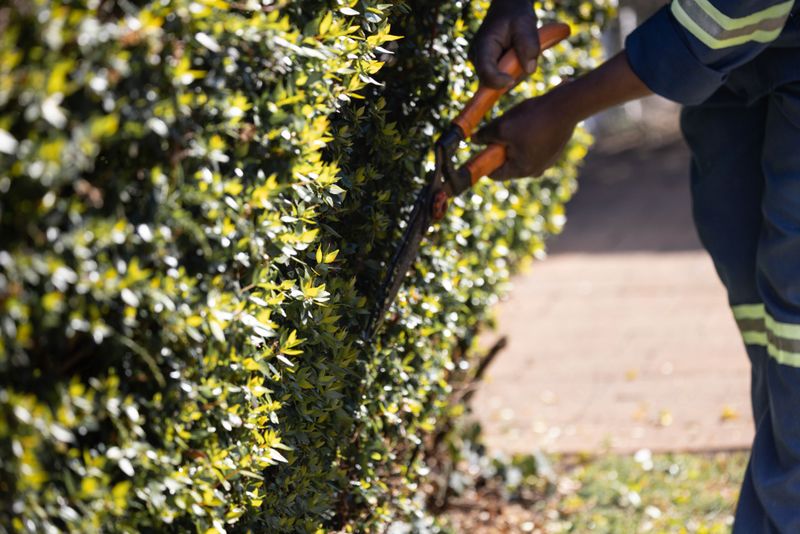
Image Credit: © Magda Ehlers / Pexels
Shady, tangled bushes feel like a private hideout to a snake. Low shrubs give racers a cool place to rest and a sneaky spot to watch for lizards.
In our neighborhoods, racers are often found living in these low plants. When those plants press right up against your walls, the hideout ends up just steps from your door.
Grab your clippers and give your hedges some breathing room. Trim branches so they do not touch the house, and lift the lower limbs so you can see the ground underneath.
Walkways deserve attention too. Nobody enjoys brushing past a leafy bush and wondering what might be hiding inside it.
Many experts suggest creating a clear strip around the foundation. A band of bare gravel about 24 to 36 inches wide makes the area feel open and exposed to snakes.
Snakes like cover, so an open strip is not very inviting. You also get a bonus, because gravel helps you spot bugs and other visitors more easily.
Plan a quick trim every few weeks during the growing season. Florida plants grow fast, and a tidy hedge in spring can turn into a jungle by summer.
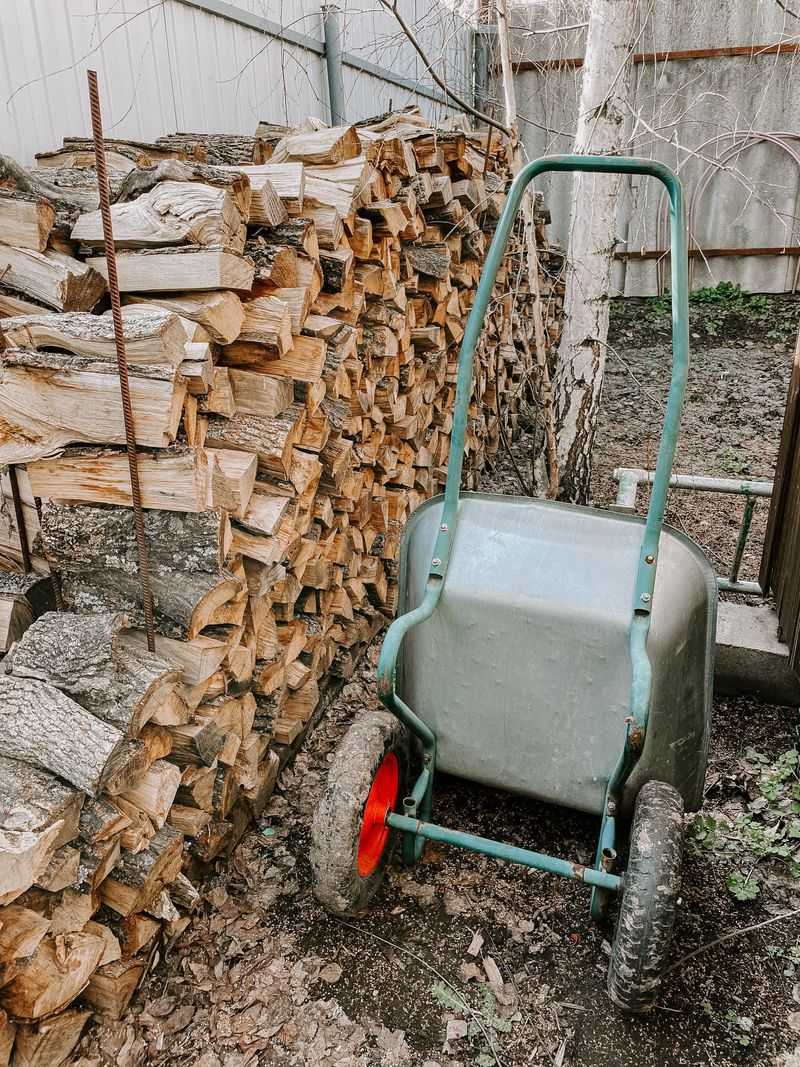
Image Credit: © Lera Mk / Pexels
That pile of branches you meant to haul away last month? To a snake, it might as well be a five-star hotel with room service.
Brush piles, leaf heaps, and stacked wood stay shady and damp underneath. Bugs, lizards, and mice move in fast, and racers follow the crowd.
In warm, humid weather, things happen quickly. Experts say a fresh pile can turn into a busy little habitat in about two weeks.
So the first step is simple: get piles away from the house. Drag brush to the far edge of the yard, or bag it up for yard waste pickup.
Firewood needs a little extra care. Stack it neatly and raise it off the ground on pallets or a metal rack, which leaves less shelter beneath it.
A messy jumble of logs has lots of gaps and tunnels. A tight, raised stack is much harder for critters to call home.
Rake up leaves after storms too, since Florida storms can scatter limbs everywhere. A few minutes with a rake and a wheelbarrow can make a big difference.
Treat cleanup like brushing your teeth: small, regular effort works better than one huge scrub.
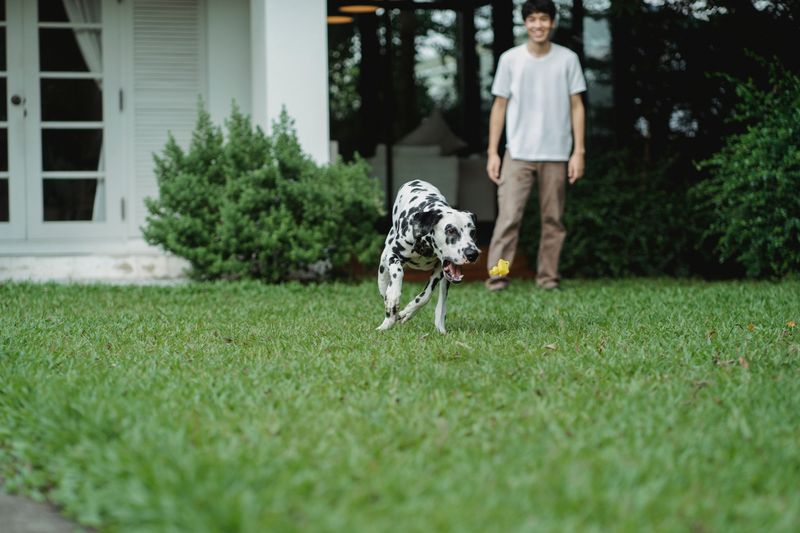
Image Credit: © Bethany Ferr / Pexels
Kids racing barefoot across the lawn, a dog chasing a ball, sprinklers clicking in the afternoon heat. Those are classic backyard moments worth protecting.
Tall grass can hide a lot. It gives snakes cover, and it also hides the ground from your eyes, so you cannot see where you or your kids are stepping.
Short grass changes that picture. Snakes tend to feel nervous crossing open, low lawns because they have nowhere to hide from hawks and other predators.
Focus your mowing on the spots that matter most. Play sets, trampolines, dog runs, and paths to the pool or shed should stay neat and short.
Edges count as well. Trim along fences and around posts, where grass often grows tall because the mower cannot reach it.
In rainy season, Florida grass can shoot up in what feels like days. A weekly mow during summer helps keep things under control.
Here is a helpful habit for families. Teach kids to look before they reach into tall plants or under objects, and to back away calmly if they spot a snake.
A tidy lawn plus smart habits makes playtime feel safer for everyone, including your furry friends.
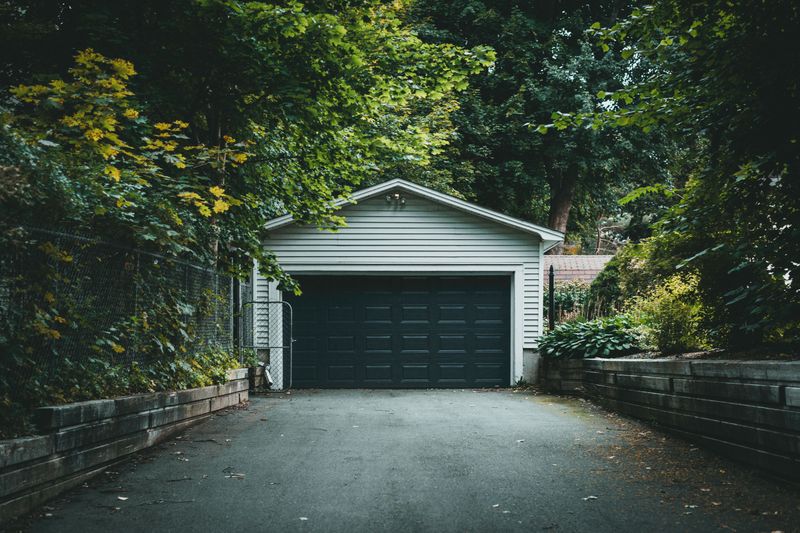
Image Credit: © Jonathan Cooper / Pexels
Garages are the sneaky side door of many Florida homes. They are cool, shady, and often full of boxes, which makes them tempting for small visitors.
Snakes can slip through surprisingly small openings. Cracks in the foundation, gaps under doors, loose window screens, and holes near the roofline can all become entry points.
Take a flashlight and walk around the garage, inside and out. Look for spots where daylight peeks through, especially at the bottom corners of the big door.
Close those gaps with weather-tough materials. Steel mesh works well for larger holes, and expanding foam fills cracks nicely.
A worn rubber seal on the garage door is a common trouble spot. Replacing it is an easy weekend project that also keeps out bugs and rainwater.
Habits matter here too. Keep the garage door and windows closed when you are not using them, rather than leaving them open all afternoon.
Clutter is the other big issue. Cardboard boxes attract mice, and mice can draw snakes right inside.
Swap boxes for plastic bins with lids, and keep items up on shelves. A clean, sealed garage gives racers fewer reasons to come exploring.
© Reddit
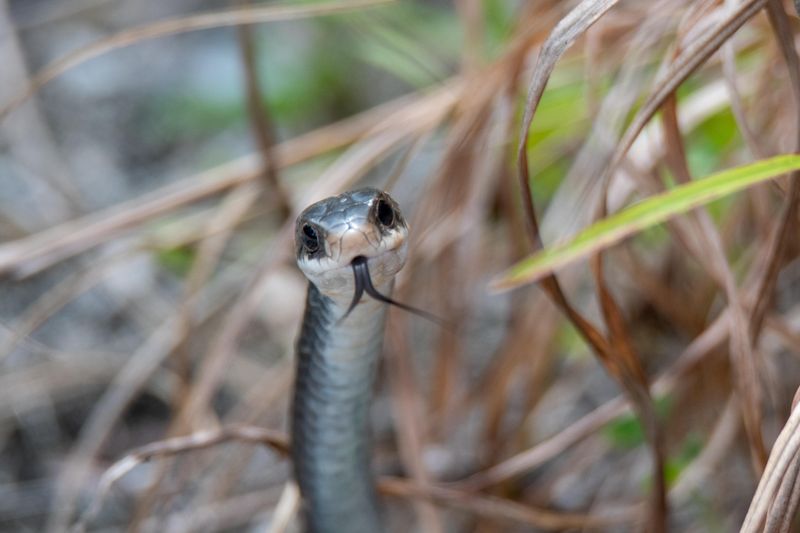
Stay calm, step back, and let the snake be the one to leave. That simple plan works for most backyard meetings with a Black Racer.
Racers are not venomous, and they are not looking for trouble with people. When someone gets close, their first move is usually to zoom off as fast as they can.
Problems tend to start when a racer feels trapped. A cornered snake may shake its tail in dry leaves, which can sound a bit like a rattle.
It might also strike or bite if someone grabs it. The bite is not dangerous, but it can still hurt, so hands off is the best rule.
Give the snake several feet of space and keep pets and kids back. In a minute or two, it will most likely slip away into the bushes.
What if one ends up in your garage? Open the door wide and gently guide it outside with a broom, without trying to pick it up.
Remember that racers are helpful neighbors in their own way. They eat rodents and other pests, so a little respect goes a long way.
The post The Florida Yard Cleanup That Can Make Black Racer Encounters Less Likely Around Your House appeared first on Positivebloom.
Black racers don’t wander into Florida yards at random. They follow shelter, shade, and snacks, and some leftover habits around your house put out all three without you meaning to.
A tidy-looking property can still send the wrong signals once you view it from a snake’s level.
Most homeowners overlook the same few spots. A weekend of work can change the picture, and none of it needs special tools.
You won’t turn your yard into a snake-free zone, and you shouldn’t try. You can make the odds of a surprise a lot lower.
Walk the perimeter with fresh eyes before the next big cleanup. The fix probably sits closer to your door than you’d guess.
1. Black Racers Are Florida’s Most Common Black Snake
© Florida Museum of Natural History – University of Florida
Picture a snake that looks like it was dipped in shiny black paint. That is the Southern Black Racer, and it lives in every corner of the state.
Folks in Central Florida see these snakes a lot, often near gardens, fences, and backyard edges. If you have spotted a black snake in your yard, odds are good it was a racer.
Adults are long and slim, usually 3 to 5 feet, and some grow even longer. Their backs shine like polished shoes, and their bellies are gray or pale cream.
Look closely at the face and you will notice a bright white chin and throat. That white patch is one of the easiest clues for telling a racer apart from other dark snakes.
Here is the part that calms many nervous neighbors. Black Racers are not venomous, so they are not the kind of snake that sends people to the hospital with a dangerous bite.
Fun fact for curious kids: young racers look totally different from their parents. Babies have gray bodies with reddish-brown blotches, and they slowly turn black as they grow up.
Knowing what you are looking at takes away a lot of fear. Once you can name the snake, you can make smart choices about your yard instead of panicking every time something wiggles.
2. They Hunt By Day, So They’re Easy To Spot
© Owlcation
Owls hunt at night, but racers prefer the sunshine. Scientists call animals like this diurnal, which simply means they are busy during daylight hours.
That schedule explains why so many people bump into them. You are out watering plants or walking the dog, and the racer is out looking for lunch at the very same time.
Some snakes sit still and wait for food to wander close. Racers are different, because they go searching for their meals like tiny patrol officers.
Watch one for a moment and you may see it lift its head off the ground. It does this to scan the area with its sharp eyes, looking for movement in the grass.
Their name comes from their speed, and they live up to it. When a racer feels watched, it often shoots away in a quick black blur.
So that sudden flash you noticed near the driveway was probably a racer trying to leave, not chase you. Seeing them often does not mean there are hundreds hiding nearby.
Use this daytime habit to your advantage. Do yard work with your eyes open, wear closed shoes, and glance ahead before reaching into plants or stepping over logs.
3. They Show Up Wherever Food Is Easy To Find
© A-Z Animals
Think of your yard as a restaurant, and the racer as a hungry customer reading the menu. If the menu looks good, the customer will keep coming back.
Black Racers eat a wide mix of small animals. Mice, rats, and moles are on the list, along with lizards, frogs, insects, birds, bird eggs, and even other snakes.
Because they eat so many things, racers can live almost anywhere food is plentiful. Gardens, wooded edges, ponds, and regular suburban yards all work fine for them.
Florida yards can be packed with anoles darting along fences and frogs singing near puddles. A busy crowd of small critters can draw a racer right to your doorstep.
That does not mean you need to chase every lizard away. Those little animals are part of a healthy yard, and racers actually help keep rodent numbers down.
The goal is balance. When food is spread out and not piled up next to your house, racers have less reason to hang around your porch and walls.
Take a slow walk around your home and ask yourself a simple question. Where are the small animals gathering, and what is pulling them there?
4. Cut Off The Rodent Buffet Around Your Home
Image Credit: © Dmytro Koplyk / Pexels
Mice love a free meal, and Florida homes can accidentally serve one every single day. Spilled birdseed, open dog food bags, and crumbs near the patio all add up quickly.
Here is the chain reaction. Food draws rodents, and rodents draw snakes looking for an easy dinner.
Start with the bird feeder. Hang it well away from the house, especially in warm months, because fallen seed on the ground is a magnet for mice and rats.
Next, look at how you store food. Pet kibble, birdseed, and even extra snacks belong in hard, sealed containers that rodents cannot chew through.
Thin bags and cardboard boxes are easy for sharp little teeth. A sturdy bin with a snap-tight lid costs a few dollars and saves a lot of trouble.
Do not forget the attic, shed, and storage spaces. Clutter gives mice cozy places to nest, so tidy up and clear out what you do not need.
Feed pets indoors when you can, or pick up bowls after mealtime. Leftover food sitting outside overnight is like leaving the restaurant doors wide open.
When the rodent buffet closes, racers usually move on to find meals somewhere else.
5. Trim Low Shrubs Back From Walls And Walkways
Image Credit: © Magda Ehlers / Pexels
Shady, tangled bushes feel like a private hideout to a snake. Low shrubs give racers a cool place to rest and a sneaky spot to watch for lizards.
In our neighborhoods, racers are often found living in these low plants. When those plants press right up against your walls, the hideout ends up just steps from your door.
Grab your clippers and give your hedges some breathing room. Trim branches so they do not touch the house, and lift the lower limbs so you can see the ground underneath.
Walkways deserve attention too. Nobody enjoys brushing past a leafy bush and wondering what might be hiding inside it.
Many experts suggest creating a clear strip around the foundation. A band of bare gravel about 24 to 36 inches wide makes the area feel open and exposed to snakes.
Snakes like cover, so an open strip is not very inviting. You also get a bonus, because gravel helps you spot bugs and other visitors more easily.
Plan a quick trim every few weeks during the growing season. Florida plants grow fast, and a tidy hedge in spring can turn into a jungle by summer.
6. Move Brush And Wood Piles Away From The House
Image Credit: © Lera Mk / Pexels
That pile of branches you meant to haul away last month? To a snake, it might as well be a five-star hotel with room service.
Brush piles, leaf heaps, and stacked wood stay shady and damp underneath. Bugs, lizards, and mice move in fast, and racers follow the crowd.
In warm, humid weather, things happen quickly. Experts say a fresh pile can turn into a busy little habitat in about two weeks.
So the first step is simple: get piles away from the house. Drag brush to the far edge of the yard, or bag it up for yard waste pickup.
Firewood needs a little extra care. Stack it neatly and raise it off the ground on pallets or a metal rack, which leaves less shelter beneath it.
A messy jumble of logs has lots of gaps and tunnels. A tight, raised stack is much harder for critters to call home.
Rake up leaves after storms too, since Florida storms can scatter limbs everywhere. A few minutes with a rake and a wheelbarrow can make a big difference.
Treat cleanup like brushing your teeth: small, regular effort works better than one huge scrub.
7. Keep Grass Mowed Where Kids And Pets Play
Image Credit: © Bethany Ferr / Pexels
Kids racing barefoot across the lawn, a dog chasing a ball, sprinklers clicking in the afternoon heat. Those are classic backyard moments worth protecting.
Tall grass can hide a lot. It gives snakes cover, and it also hides the ground from your eyes, so you cannot see where you or your kids are stepping.
Short grass changes that picture. Snakes tend to feel nervous crossing open, low lawns because they have nowhere to hide from hawks and other predators.
Focus your mowing on the spots that matter most. Play sets, trampolines, dog runs, and paths to the pool or shed should stay neat and short.
Edges count as well. Trim along fences and around posts, where grass often grows tall because the mower cannot reach it.
In rainy season, Florida grass can shoot up in what feels like days. A weekly mow during summer helps keep things under control.
Here is a helpful habit for families. Teach kids to look before they reach into tall plants or under objects, and to back away calmly if they spot a snake.
A tidy lawn plus smart habits makes playtime feel safer for everyone, including your furry friends.
8. Seal Gaps So They Don’t Wander Into The Garage
Image Credit: © Jonathan Cooper / Pexels
Garages are the sneaky side door of many Florida homes. They are cool, shady, and often full of boxes, which makes them tempting for small visitors.
Snakes can slip through surprisingly small openings. Cracks in the foundation, gaps under doors, loose window screens, and holes near the roofline can all become entry points.
Take a flashlight and walk around the garage, inside and out. Look for spots where daylight peeks through, especially at the bottom corners of the big door.
Close those gaps with weather-tough materials. Steel mesh works well for larger holes, and expanding foam fills cracks nicely.
A worn rubber seal on the garage door is a common trouble spot. Replacing it is an easy weekend project that also keeps out bugs and rainwater.
Habits matter here too. Keep the garage door and windows closed when you are not using them, rather than leaving them open all afternoon.
Clutter is the other big issue. Cardboard boxes attract mice, and mice can draw snakes right inside.
Swap boxes for plastic bins with lids, and keep items up on shelves. A clean, sealed garage gives racers fewer reasons to come exploring.
9. Give A Racer Room And It Will Usually Race Away
Stay calm, step back, and let the snake be the one to leave. That simple plan works for most backyard meetings with a Black Racer.
Racers are not venomous, and they are not looking for trouble with people. When someone gets close, their first move is usually to zoom off as fast as they can.
Problems tend to start when a racer feels trapped. A cornered snake may shake its tail in dry leaves, which can sound a bit like a rattle.
It might also strike or bite if someone grabs it. The bite is not dangerous, but it can still hurt, so hands off is the best rule.
Give the snake several feet of space and keep pets and kids back. In a minute or two, it will most likely slip away into the bushes.
What if one ends up in your garage? Open the door wide and gently guide it outside with a broom, without trying to pick it up.
Remember that racers are helpful neighbors in their own way. They eat rodents and other pests, so a little respect goes a long way.
The post The Florida Yard Cleanup That Can Make Black Racer Encounters Less Likely Around Your House appeared first on Positivebloom.