S
Sophia Hartman
Guest
- Thread Author
- #1
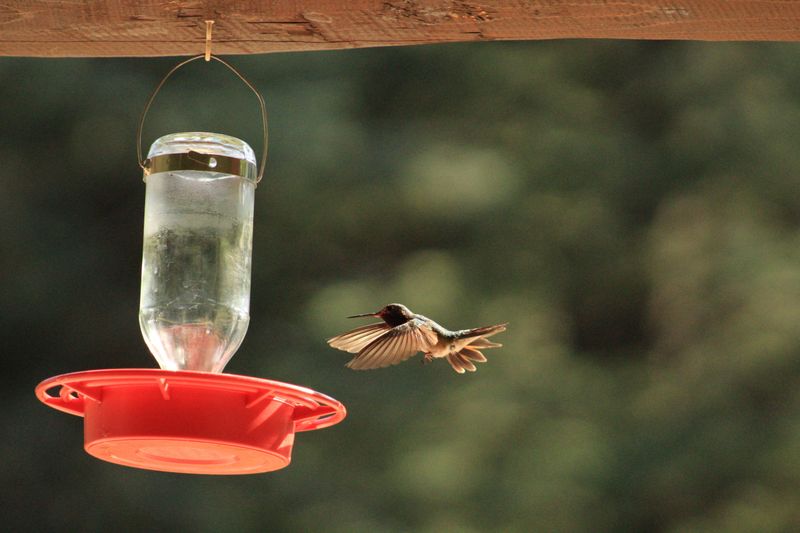
A bird that weighs about as much as a penny can fly 500 miles across the Gulf of Mexico nonstop. To fuel that trip, many of these tiny travelers nearly double their body weight in the weeks before leaving.
Shorter days, not the food in your yard, tell these birds when it is time to head south. I like knowing that a full feeder will not trick a healthy bird into staying past its departure date.
Late visitors often show up after the locals leave, because birds from farther north pass through on their own schedule. Some western species wander east in fall, and a few have turned up at backyard feeders in December.
You may stand at the window this month, watching for one more flash of green near the flowers. Is that quiet feeder still doing an important job, even when your yard has seemed empty for days?
© Reddit
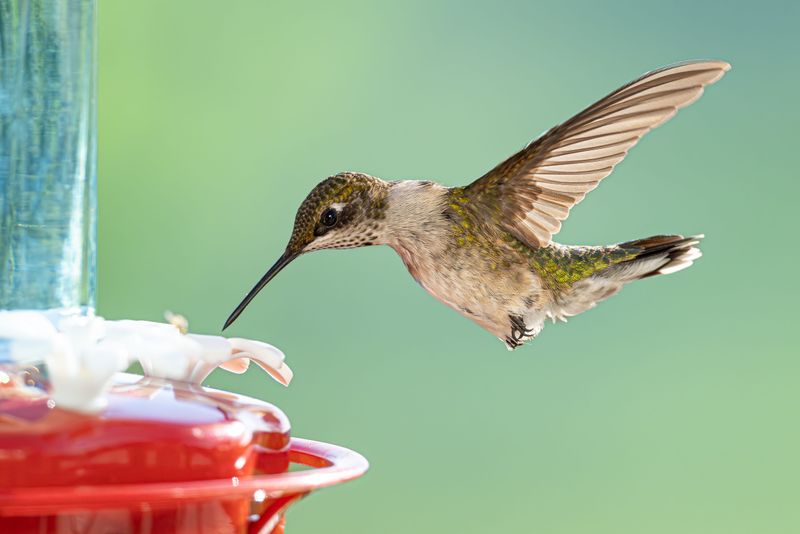
Most backyard birders can leave their hummingbird feeder up a few more weeks without interfering with migration. Extension experts at several universities agree that feeders do not stop or delay a healthy bird’s migration.
The ruby-throated hummingbird is the main species in the eastern United States, and most leave by mid-October. Hormone changes linked to shorter days push these birds to fatten up and fly south on time.
That means your sugar water is a helpful snack, not a reason for a bird to skip its trip. A bird that stays late is often young, sick, or injured, and your feeder may help it recover.
Taking the feeder down too early can leave stragglers with fewer food choices as fall flowers fade quickly. Many garden blooms, like salvia and jewelweed, slow down after the first frost hits your area.
Insects also become harder to find, and hummingbirds rely on small bugs for protein throughout the year. A feeder fills that gap and gives travelers quick energy while they rest in your neighborhood.
The exact timing depends on where you live, since southern yards often see birds later than northern ones. Gardeners along the Gulf Coast may host visitors well into winter, while Minnesota feeders usually go quiet sooner.
So if you still enjoy filling it, keep that feeder clean, full, and hanging in its usual spot. As long as the nectar stays fresh, the feeder is unlikely to cause problems, and you might catch one more visit before the season ends.
© Country Living Magazine
Ask a bird-watching club about timing, and you will likely hear the same simple answer from several members. Keep the feeder up for about two weeks after you see your last hummingbird of the year.
Many university extension services and Audubon groups share this guideline because it covers late migrants passing through. Birds from Canada and the northern states often move south after your local summer residents have left.
A simple calendar note can help you track the timing without guessing or relying on memory alone. Write down the date of your last sighting, then count fourteen days forward and mark that spot.
If another bird appears during that stretch, start your count over from the new sighting date. Some patient gardeners repeat this cycle several times in October before the feeder finally stays quiet.
The rule is a helpful habit rather than a strict law, and nobody tracks exact dates for every bird. Scientists still have gaps in their knowledge about how many late migrants use backyard feeders each fall.
Even so, the two-week window costs very little and gives late birds one more reliable place to refuel. A small batch of sugar water is enough, since you will likely see fewer visitors this time of year.
I find that half-filling the feeder reduces waste and makes the regular cleaning job much quicker. It also lets you keep watching without feeling like you are pouring sugar down the drain every week.
© Reddit
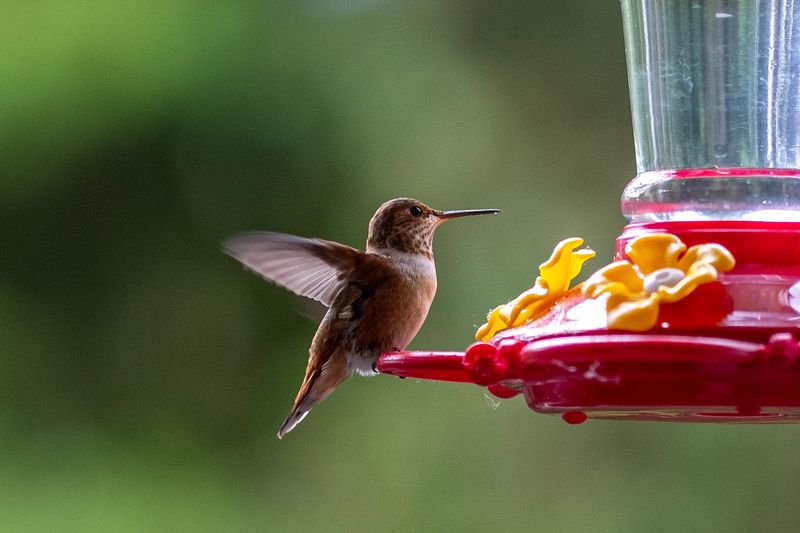
Every fall, birders in states like Georgia, Alabama, and Louisiana report a surprising guest at their feeders. The rufous hummingbird, a feisty orange bird from the West, sometimes travels east instead of heading straight south.
These western wanderers often show up from October through winter, long after the ruby-throats have gone. Rufous hummingbirds handle cold better than many people expect, and some survive chilly nights below freezing.
Other rare fall visitors include black-chinned, calliope, and Allen’s hummingbirds, though sightings vary a lot by year. Researchers who band these birds have learned that some return to the same yard in later winters.
Out West, Anna’s hummingbirds live year-round along the Pacific Coast from California to southern British Columbia. Gardeners in those areas often keep feeders up all winter, since resident birds use them year-round.
A late visitor at your feeder is worth reporting, because scientists use those records to track changing ranges. You can log sightings on free sites like eBird, which is run by the Cornell Lab of Ornithology.
Some states also have volunteer banders who will visit your yard to safely identify an unusual winter bird. Snap a clear photo first, since many young or female hummingbirds look alike and are tricky to name.
Leaving your feeder up a little longer gives you a real chance to spot one of these rare guests. Honestly, that tiny bit of extra effort could turn an ordinary October afternoon into a memorable backyard sighting.
© Reddit
One part white sugar mixed with four parts water is the recipe most extension services recommend for feeders. That ratio closely matches the natural sugar level found in many of the flowers hummingbirds visit.
Skip honey, brown sugar, and artificial sweeteners, because they can spoil fast or offer no real energy. Red dye is not needed either, since the red parts on most feeders already attract passing birds.
Cooler fall weather slows down mold and bacteria, so you can change the nectar less often now. Many experts suggest swapping it out about once a week when daytime highs stay below 70 degrees.
Warm spells still happen in October, and nectar can turn cloudy within two or three hot days. If you notice cloudy liquid, black specks, or a sour smell, dump it and clean the feeder right away.
Hot water and a bottle brush handle most cleaning jobs, and a vinegar soak helps with stubborn spots. Rinse well afterward, since leftover soap or vinegar can change the taste and turn visitors away.
Late migrants are often tired and hungry, so spoiled food could hurt a bird that is already struggling. Fresh nectar gives them clean fuel for the next leg of a trip that may cover thousands of miles.
Making a small batch every week takes about five minutes once the routine becomes a regular habit. Store extra sugar water in a covered jar in the fridge, where it usually stays fresh for a week.
© CBC
Frost on the porch railing does not mean your feeder has to come inside for good this season. Sugar water mixed at the usual ratio freezes a couple of degrees below plain water, which buys a little time.
Hard freezes can still turn the nectar to slush, and frozen feeders may crack or start leaking. Glass bottles and thin plastic tend to split first, so check your feeder each chilly morning.
A simple fix is to bring the feeder indoors at night, then hang it back up at sunrise. Hummingbirds feed heavily early in the day, since they burn through much of their energy overnight.
On cold nights, these birds slip into a deep sleep called torpor that lowers their heart rate sharply. Their body temperature can drop by dozens of degrees, which helps them save fuel until morning arrives.
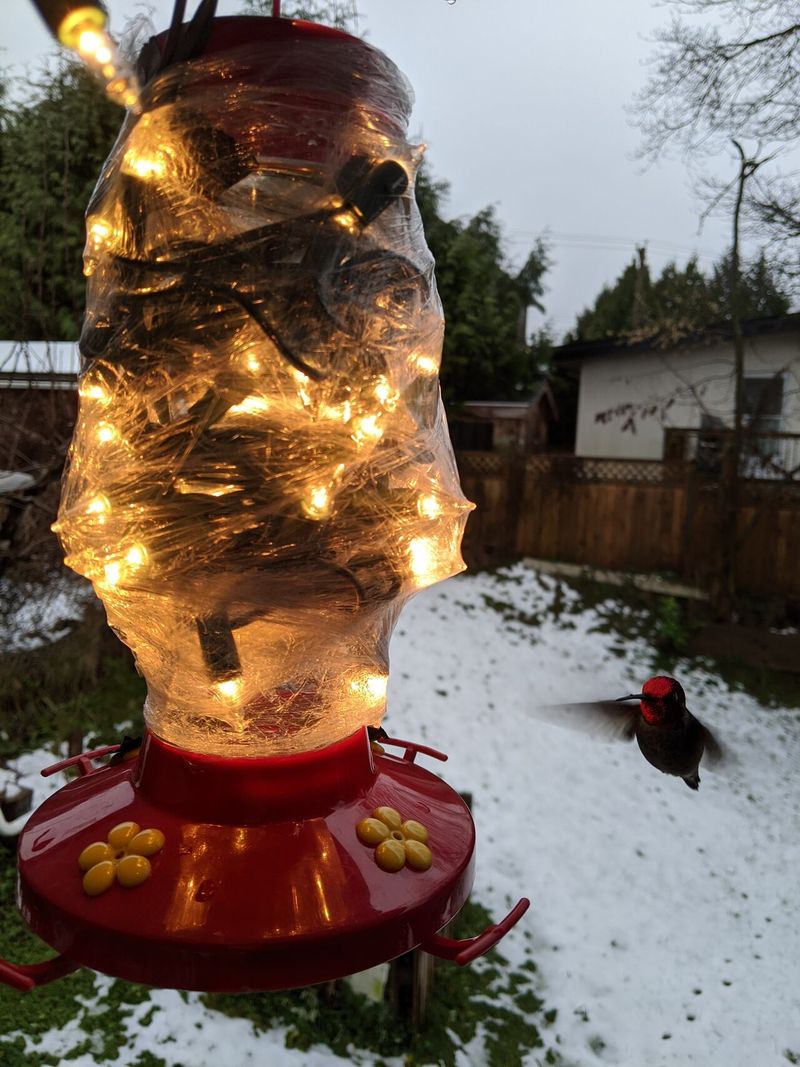
Some gardeners hang a feeder near a sheltered wall or under an eave to block cold winds. Others wrap a string of outdoor incandescent holiday lights around the feeder to add gentle warmth.
Clip-on feeder heaters are also sold online, and they work well for people hosting winter birds. Use only outdoor-rated cords and products, and keep any heat source away from dry leaves or siding.
Having two feeders makes the morning swap much easier when temperatures dip below freezing for several days. You can thaw one inside while the other hangs outside, ready for the first hungry visitor of the day.
© Reddit
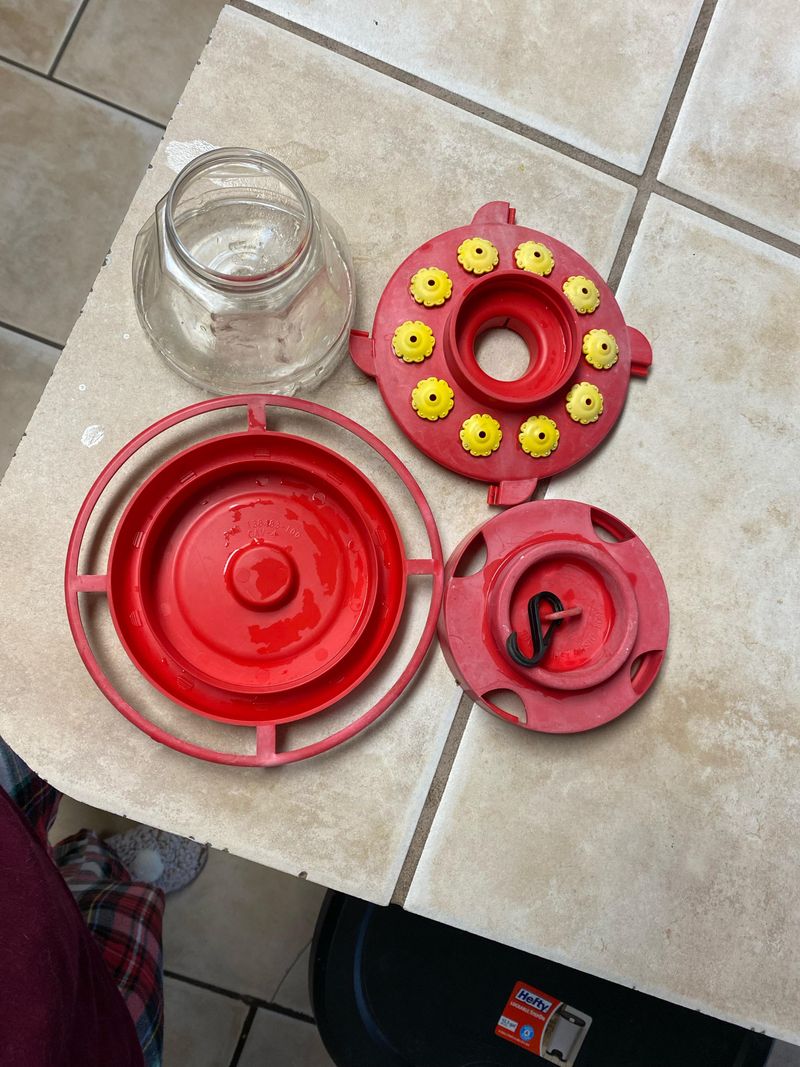
Once two quiet weeks pass with no visitors, your feeder has earned a well-deserved rest until spring. Cleaning it carefully before storage keeps mold from growing in hidden corners over the winter months.
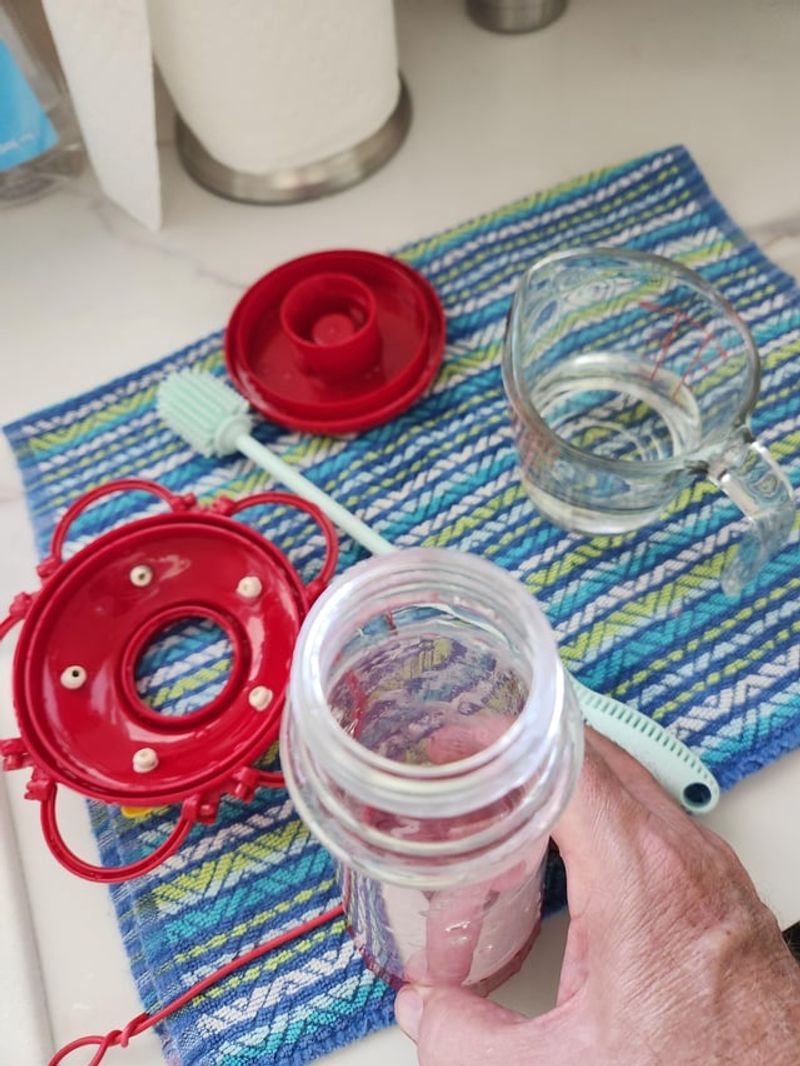
Take the feeder apart and scrub each piece with hot water and a small bottle brush. Feeding ports collect sticky residue, so a pipe cleaner or old toothbrush helps reach those tight spaces.
Let every part dry fully in the air before you pack it away in a dark bin or box. Trapped moisture is a common reason feeders come out of storage looking spotty and smelling musty.
Check for cracks, faded parts, or worn gaskets now, while you still remember how the feeder performed. Ordering replacement parts during the off-season often saves money and stress before the busy spring rush begins.
Fall is also a great time to plant native perennials that feed hummingbirds naturally next year. Bee balm, cardinal flower, and native columbine all offer nectar, and many extension services recommend them.
Ruby-throats usually return to the southern states in March and reach the northern states by May. Mark your calendar to hang the feeder about a week or two before their typical arrival in your region.
Online migration maps, like the ones shared by bird groups each spring, show sightings moving north in real time. I enjoy checking them in late winter, because it feels like waiting for old friends to come home.
The post Should Your Hummingbird Feeder Come Down Now Or Stay Up A Few More Weeks? appeared first on Positivebloom.
Shorter days, not the food in your yard, tell these birds when it is time to head south. I like knowing that a full feeder will not trick a healthy bird into staying past its departure date.
Late visitors often show up after the locals leave, because birds from farther north pass through on their own schedule. Some western species wander east in fall, and a few have turned up at backyard feeders in December.
You may stand at the window this month, watching for one more flash of green near the flowers. Is that quiet feeder still doing an important job, even when your yard has seemed empty for days?
Your Feeder Can Stay Up Longer Than You Expect
Most backyard birders can leave their hummingbird feeder up a few more weeks without interfering with migration. Extension experts at several universities agree that feeders do not stop or delay a healthy bird’s migration.
The ruby-throated hummingbird is the main species in the eastern United States, and most leave by mid-October. Hormone changes linked to shorter days push these birds to fatten up and fly south on time.
That means your sugar water is a helpful snack, not a reason for a bird to skip its trip. A bird that stays late is often young, sick, or injured, and your feeder may help it recover.
Taking the feeder down too early can leave stragglers with fewer food choices as fall flowers fade quickly. Many garden blooms, like salvia and jewelweed, slow down after the first frost hits your area.
Insects also become harder to find, and hummingbirds rely on small bugs for protein throughout the year. A feeder fills that gap and gives travelers quick energy while they rest in your neighborhood.
The exact timing depends on where you live, since southern yards often see birds later than northern ones. Gardeners along the Gulf Coast may host visitors well into winter, while Minnesota feeders usually go quiet sooner.
So if you still enjoy filling it, keep that feeder clean, full, and hanging in its usual spot. As long as the nectar stays fresh, the feeder is unlikely to cause problems, and you might catch one more visit before the season ends.
The Two Week Rule Most Experts Follow
© Country Living Magazine
Ask a bird-watching club about timing, and you will likely hear the same simple answer from several members. Keep the feeder up for about two weeks after you see your last hummingbird of the year.
Many university extension services and Audubon groups share this guideline because it covers late migrants passing through. Birds from Canada and the northern states often move south after your local summer residents have left.
A simple calendar note can help you track the timing without guessing or relying on memory alone. Write down the date of your last sighting, then count fourteen days forward and mark that spot.
If another bird appears during that stretch, start your count over from the new sighting date. Some patient gardeners repeat this cycle several times in October before the feeder finally stays quiet.
The rule is a helpful habit rather than a strict law, and nobody tracks exact dates for every bird. Scientists still have gaps in their knowledge about how many late migrants use backyard feeders each fall.
Even so, the two-week window costs very little and gives late birds one more reliable place to refuel. A small batch of sugar water is enough, since you will likely see fewer visitors this time of year.
I find that half-filling the feeder reduces waste and makes the regular cleaning job much quicker. It also lets you keep watching without feeling like you are pouring sugar down the drain every week.
Late Travelers Still Need A Pit Stop
Every fall, birders in states like Georgia, Alabama, and Louisiana report a surprising guest at their feeders. The rufous hummingbird, a feisty orange bird from the West, sometimes travels east instead of heading straight south.
These western wanderers often show up from October through winter, long after the ruby-throats have gone. Rufous hummingbirds handle cold better than many people expect, and some survive chilly nights below freezing.
Other rare fall visitors include black-chinned, calliope, and Allen’s hummingbirds, though sightings vary a lot by year. Researchers who band these birds have learned that some return to the same yard in later winters.
Out West, Anna’s hummingbirds live year-round along the Pacific Coast from California to southern British Columbia. Gardeners in those areas often keep feeders up all winter, since resident birds use them year-round.
A late visitor at your feeder is worth reporting, because scientists use those records to track changing ranges. You can log sightings on free sites like eBird, which is run by the Cornell Lab of Ornithology.
Some states also have volunteer banders who will visit your yard to safely identify an unusual winter bird. Snap a clear photo first, since many young or female hummingbirds look alike and are tricky to name.
Leaving your feeder up a little longer gives you a real chance to spot one of these rare guests. Honestly, that tiny bit of extra effort could turn an ordinary October afternoon into a memorable backyard sighting.
Cleaner Nectar Keeps Fall Visitors Healthy
One part white sugar mixed with four parts water is the recipe most extension services recommend for feeders. That ratio closely matches the natural sugar level found in many of the flowers hummingbirds visit.
Skip honey, brown sugar, and artificial sweeteners, because they can spoil fast or offer no real energy. Red dye is not needed either, since the red parts on most feeders already attract passing birds.
Cooler fall weather slows down mold and bacteria, so you can change the nectar less often now. Many experts suggest swapping it out about once a week when daytime highs stay below 70 degrees.
Warm spells still happen in October, and nectar can turn cloudy within two or three hot days. If you notice cloudy liquid, black specks, or a sour smell, dump it and clean the feeder right away.
Hot water and a bottle brush handle most cleaning jobs, and a vinegar soak helps with stubborn spots. Rinse well afterward, since leftover soap or vinegar can change the taste and turn visitors away.
Late migrants are often tired and hungry, so spoiled food could hurt a bird that is already struggling. Fresh nectar gives them clean fuel for the next leg of a trip that may cover thousands of miles.
Making a small batch every week takes about five minutes once the routine becomes a regular habit. Store extra sugar water in a covered jar in the fridge, where it usually stays fresh for a week.
Frosty Nights Call For A Simple Plan
© CBC
Frost on the porch railing does not mean your feeder has to come inside for good this season. Sugar water mixed at the usual ratio freezes a couple of degrees below plain water, which buys a little time.
Hard freezes can still turn the nectar to slush, and frozen feeders may crack or start leaking. Glass bottles and thin plastic tend to split first, so check your feeder each chilly morning.
A simple fix is to bring the feeder indoors at night, then hang it back up at sunrise. Hummingbirds feed heavily early in the day, since they burn through much of their energy overnight.
On cold nights, these birds slip into a deep sleep called torpor that lowers their heart rate sharply. Their body temperature can drop by dozens of degrees, which helps them save fuel until morning arrives.
Some gardeners hang a feeder near a sheltered wall or under an eave to block cold winds. Others wrap a string of outdoor incandescent holiday lights around the feeder to add gentle warmth.
Clip-on feeder heaters are also sold online, and they work well for people hosting winter birds. Use only outdoor-rated cords and products, and keep any heat source away from dry leaves or siding.
Having two feeders makes the morning swap much easier when temperatures dip below freezing for several days. You can thaw one inside while the other hangs outside, ready for the first hungry visitor of the day.
Next Spring Starts With A Clean Feeder Now
Once two quiet weeks pass with no visitors, your feeder has earned a well-deserved rest until spring. Cleaning it carefully before storage keeps mold from growing in hidden corners over the winter months.
Take the feeder apart and scrub each piece with hot water and a small bottle brush. Feeding ports collect sticky residue, so a pipe cleaner or old toothbrush helps reach those tight spaces.
Let every part dry fully in the air before you pack it away in a dark bin or box. Trapped moisture is a common reason feeders come out of storage looking spotty and smelling musty.
Check for cracks, faded parts, or worn gaskets now, while you still remember how the feeder performed. Ordering replacement parts during the off-season often saves money and stress before the busy spring rush begins.
Fall is also a great time to plant native perennials that feed hummingbirds naturally next year. Bee balm, cardinal flower, and native columbine all offer nectar, and many extension services recommend them.
Ruby-throats usually return to the southern states in March and reach the northern states by May. Mark your calendar to hang the feeder about a week or two before their typical arrival in your region.
Online migration maps, like the ones shared by bird groups each spring, show sightings moving north in real time. I enjoy checking them in late winter, because it feels like waiting for old friends to come home.
The post Should Your Hummingbird Feeder Come Down Now Or Stay Up A Few More Weeks? appeared first on Positivebloom.