L
Liam Prescott
Guest
- Thread Author
- #1
Next summer’s flowers on many popular shrubs are already tucked inside fat buds at the tips of this year’s stems. Those buds formed in late summer, so a quick fall trim can remove a whole season of blooms.
I like how the papery flower heads hang on through winter, slowly fading from pink or blue to tan. Some gardeners leave those old blooms on to shield the tender buds below from cold and wind, though research on the benefit is limited.
Not every type follows the same schedule, because some kinds form their flowers on fresh spring growth instead. You need to know which kind you planted before you reach for the pruners this October.
I believe many flowerless summers start with a tidy gardener who simply wanted the yard to look neat. So who would guess that the messy shrub in the corner is often the one that blooms best?
© Reddit
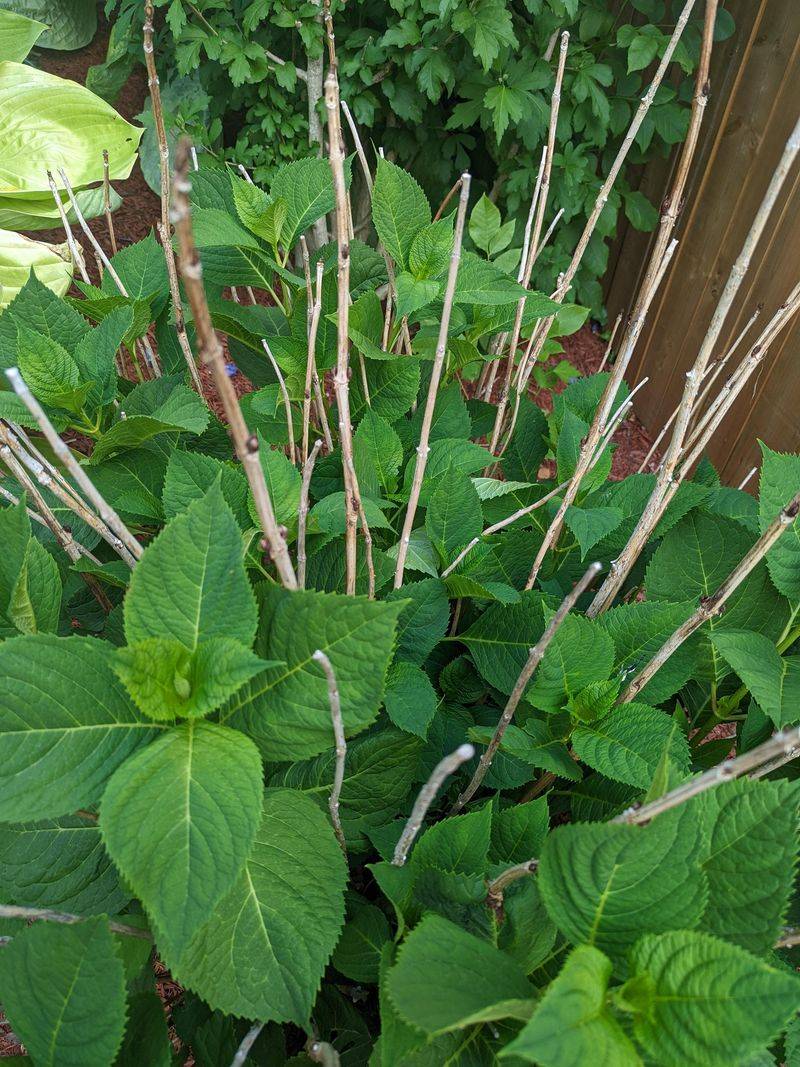
Bigleaf hydrangeas, known to scientists as Hydrangea macrophylla, set their flower buds for next year in late summer. By October, those buds sit quietly at the ends of the stems, waiting for warm weather to return.
That timing explains the biggest fall pruning mistake gardeners make with these popular shrubs across much of the country. Cutting the stems back now removes the buds, so the plant grows leaves next summer but few flowers.
Gardeners call this habit blooming on old wood, which means flowers come from stems that grew the previous year. Oakleaf and mountain hydrangeas follow the same pattern, so they also need protection from an eager fall trim.
You can often spot the swollen buds by gently pulling back the top pair of leaves on a stem. They look plump and green or reddish, and they hold the tiny flower parts for next summer.
Many university extension services suggest pruning these shrubs right after they finish blooming in summer, not in autumn. That window gives new stems enough time to grow and form buds before cold weather arrives in fall.
Reblooming types like Endless Summer can flower on both old and new stems, which offers a little backup. Even so, a heavy fall cut on those shrubs often delays the first flush of blooms by several weeks.
So the simplest fall plan for bigleaf hydrangeas is to admire them and keep your pruners in the shed. Your patience this month pays off with big, colorful flower clusters when next summer finally rolls around.
© Simple Garden Life
A friend once proudly showed me her neatly trimmed hydrangea row, and the next July it held only leaves. She had treated every shrub the same way, even though her yard held two very different kinds.
Panicle hydrangeas and smooth hydrangeas, such as the classic Annabelle, form their flowers on stems that grow each spring. Bigleaf, oakleaf, mountain, and climbing hydrangeas mostly bloom on older stems that formed buds the previous year.
The plant tag is the easiest clue, so check it for a Latin name before making any cuts. Look for words like macrophylla, quercifolia, serrata, paniculata, or arborescens printed somewhere on the small plastic label.
If the tag is long gone, you can still identify the shrub by studying its leaves and flowers. Oakleaf types have large lobed leaves that turn deep red in fall, much like the leaves of an oak tree.
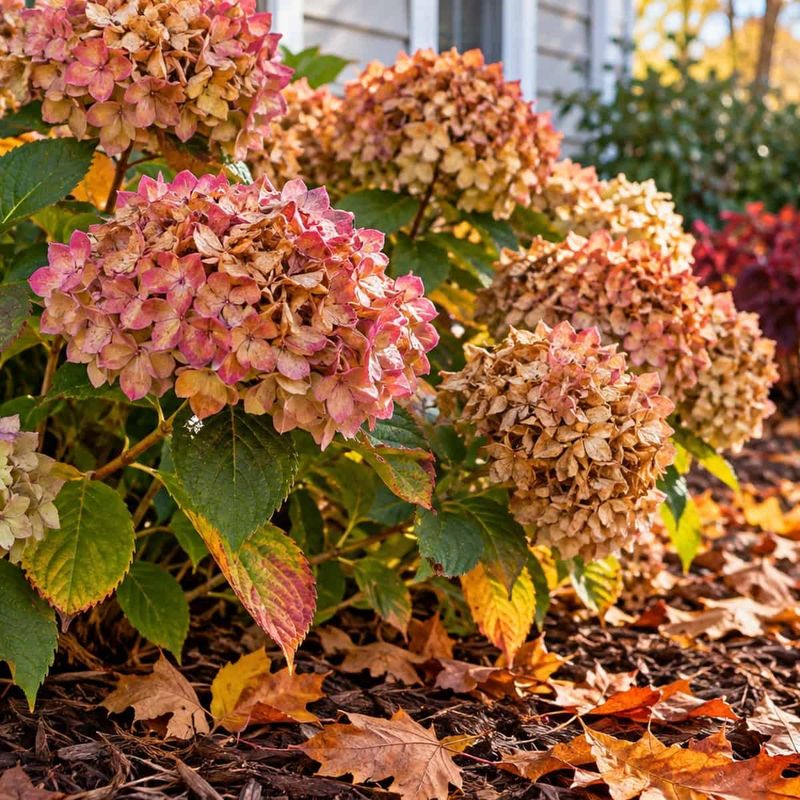
Panicle hydrangeas carry cone-shaped flower heads, while bigleaf types usually show round mopheads or flat lacecap clusters. Smooth hydrangeas often have thinner, heart-shaped leaves and big white or pale green ball-shaped blooms in early summer.
Knowing the type tells you whether fall pruning is a small issue or a serious threat to next year’s flowers. Snap a few photos and jot down notes now, while the leaves and dried blooms are still easy to see.
Many county extension offices will help identify a mystery shrub if you bring in a clear photo or leaf sample. That quick visit can save you from guessing wrong and losing a full summer of blooms.
© Reddit
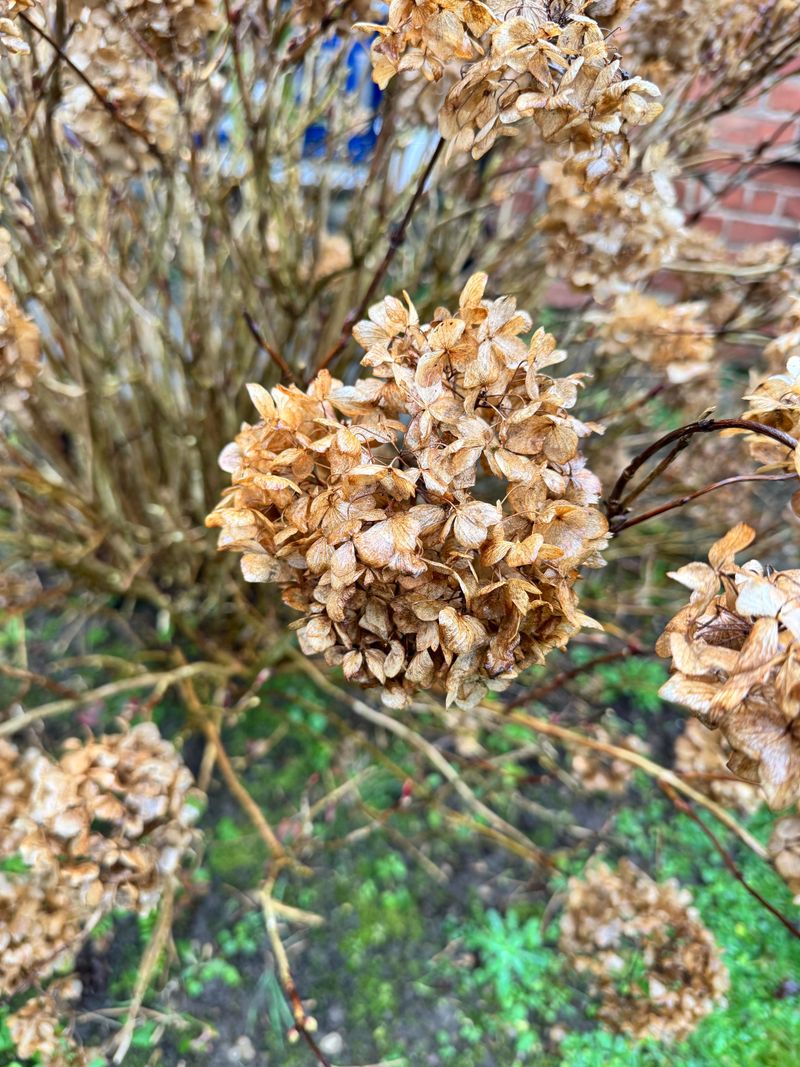
Those crispy, tan flower heads might look a little scruffy, but they are doing quiet work on your shrub. Many gardeners snip them off in fall to tidy up, and that habit can cost bigleaf types their buds.
On mophead hydrangeas, the next year’s flower buds often sit just below the old bloom on the same stem. A careless cut that removes too much stem can take those buds right along with the faded flower.
Several extension services suggest leaving the dried heads in place through winter for a little extra protection. The evidence for strong frost shielding is limited, but leaving them rarely causes harm and costs nothing.
Those papery blooms also catch snow and frost, which adds pretty texture to a quiet winter garden. Some gardeners even cut a few for dried arrangements, taking only a short piece of stem with each one.
If you want to remove spent blooms, wait until early spring when you can clearly see the swelling buds. Then cut just above the first healthy pair of buds below each old flower head, and stop there.
Panicle and smooth hydrangea heads can stay too, since those shrubs bloom on new growth anyway. Their sturdy, upright flower clusters often look striking against a gray winter sky or a dusting of snow.
Leaving the heads in place gives you a rest from yard chores during the busy fall cleanup season. Leaving the heads in place gives you a rest from yard chores during the busy fall cleanup season. You also get one less job on your October list.
© Reddit
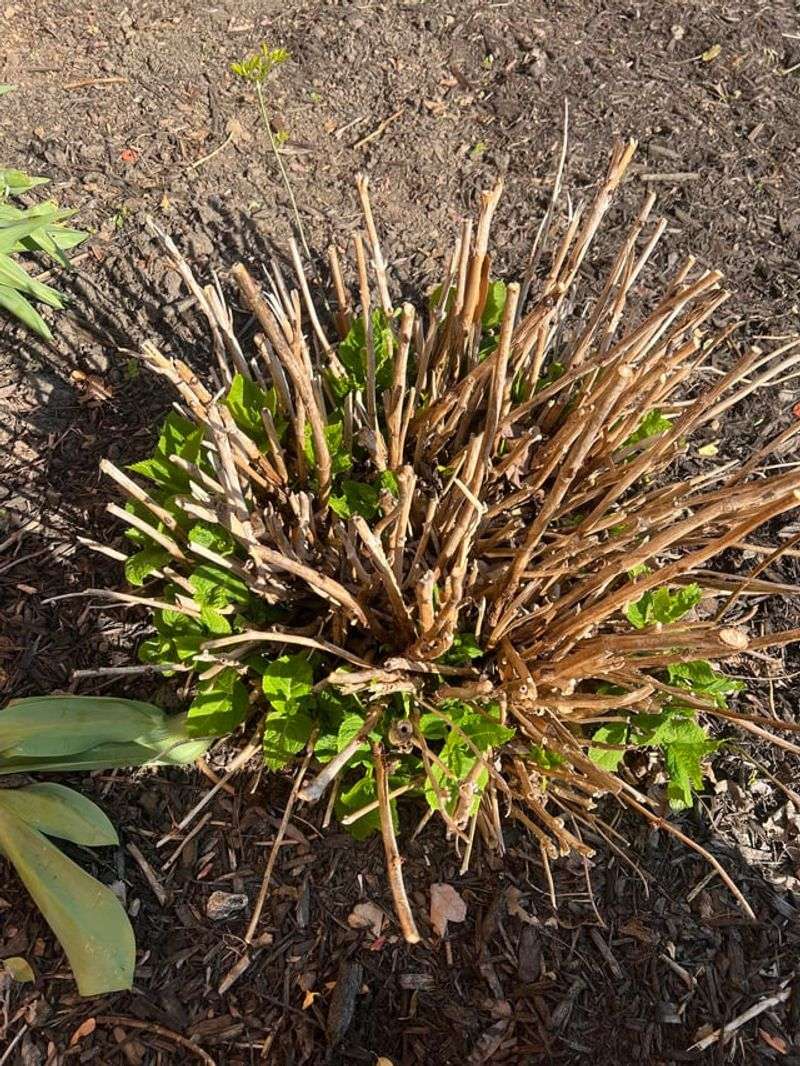
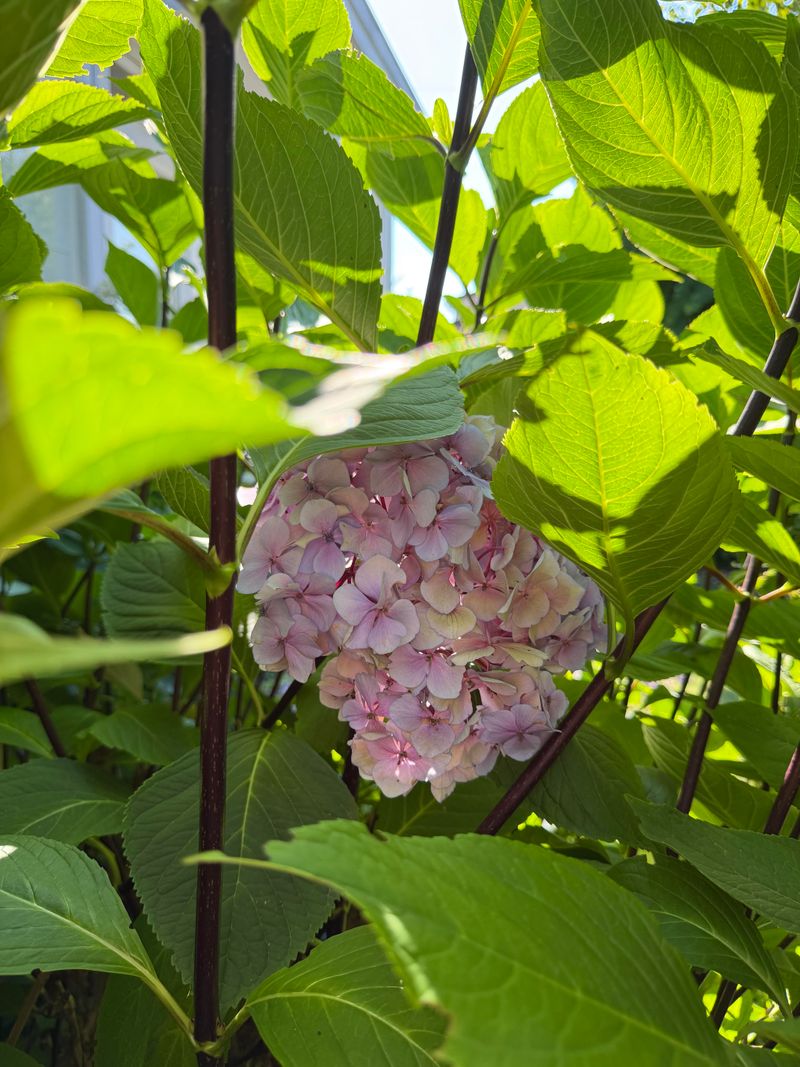
Ever wonder why a shrub cut to knee height in October comes back lush but bloomless the next summer? Old wood hydrangeas lose every bud on the stems you remove, and they cannot replace those buds before spring.
Cutting bigleaf, oakleaf, or mountain hydrangeas down to the ground is one of the costliest fall mistakes. The shrubs usually survive and regrow, but the new stems often stay green without flowers for a full season.
Fresh cuts in fall can also trigger a flush of soft new growth if the weather stays mild. That tender growth may not harden off in time, so the first hard freeze can damage it.
Shrubs that look too big for their space are a common reason gardeners reach for the loppers. A better plan is to remove a few of the oldest stems at the base right after summer flowering.
Many extension guides suggest taking out no more than one third of the oldest stems in a single year. That slow approach shrinks the shrub over time while leaving plenty of budded stems to flower next summer.
If size is a constant struggle, the shrub may simply be planted in the wrong spot for its mature width. Fall is actually a fine time to move it, since cooler weather helps roots settle into new soil.
Compact varieties bred to stay small can also replace an oversized shrub without any need for heavy yearly pruning. Your future self will thank you every July when the flowers show up without any extra effort.
© Reddit
Fertilizer works like a green light for growth, and hydrangeas follow that signal even late in the year. Feeding shrubs in September or October can push out soft new shoots right when they should be slowing down.
That fresh growth has thin cell walls and little time to toughen up before the first freeze arrives. Cold damage on those shoots can reach down into the stems where next summer’s flower buds are waiting.
Pruning and feeding mistakes often go together, because both send the same message to keep growing now. A shrub that gets trimmed and fed in fall faces a higher risk of winter injury to its buds.
Most extension services suggest feeding hydrangeas in spring, with a possible light second feeding in early summer. Many recommend stopping fertilizer by about midsummer so the shrubs have time to harden off before cold weather.
Hydrangeas also tend to grow big leaves at the expense of flowers when they get too much nitrogen. A slow-release, balanced product used sparingly in spring usually gives them all the food they need.
Soil amendments meant to change bloom color, like garden sulfur or lime, follow different rules than fertilizer does. These materials work slowly, so fall is a reasonable time to add them after a soil test.
Put the fertilizer bag away for the season and let your shrubs settle into their natural fall slowdown. Come spring, you can feed them with confidence once the buds begin to swell and leaves unfold.
© Reddit
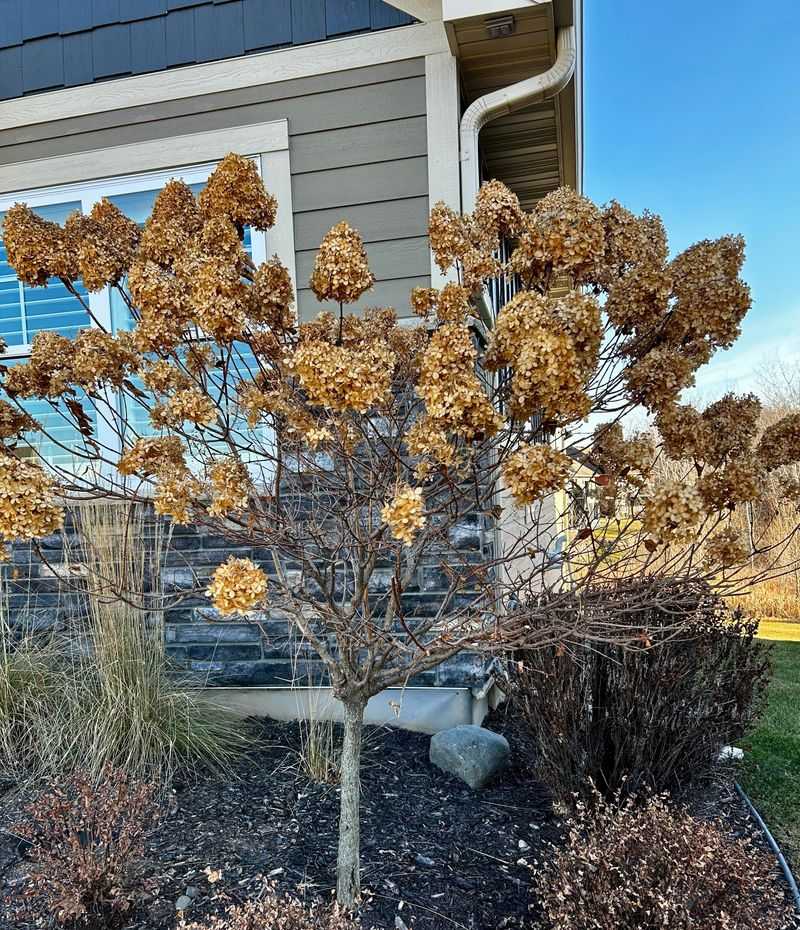
Panicle hydrangeas like Limelight and smooth types like Annabelle are the forgiving members of the family. Since they bloom on new spring stems, a fall trim rarely costs you flowers the way it does with bigleafs.
Even so, most extension services suggest waiting until late winter or early spring to prune these shrubs. Late pruning lets you see winter damage clearly and cut back to strong, healthy buds before growth starts.
Fall cuts also leave open wounds through the coldest months, which can lead to browned stem tips by spring. Waiting a few months means the cuts heal quickly once the shrub wakes up and starts pushing new shoots.
The tall, cone-shaped flower heads on panicle hydrangeas also bring welcome structure to a bare winter yard. Many gardeners enjoy watching them shift from creamy white to rosy pink and then soft tan through autumn.
Smooth hydrangeas can handle a hard cut in late winter, often down to about one or two feet tall. Some gardeners leave taller stems instead, since very hard cuts can produce floppy stems that bend under heavy blooms.
Panicle types usually respond best to cutting back about one third of their height in late winter. Thicker stems left behind help support the heavy cone-shaped flowers, so the shrub stays upright after summer rain.
Mark your calendar for February or March, depending on your region, and enjoy a relaxed autumn instead. Your panicle shrubs will reward that patience with sturdy stems and plenty of big blooms next summer.
© Garden Insider
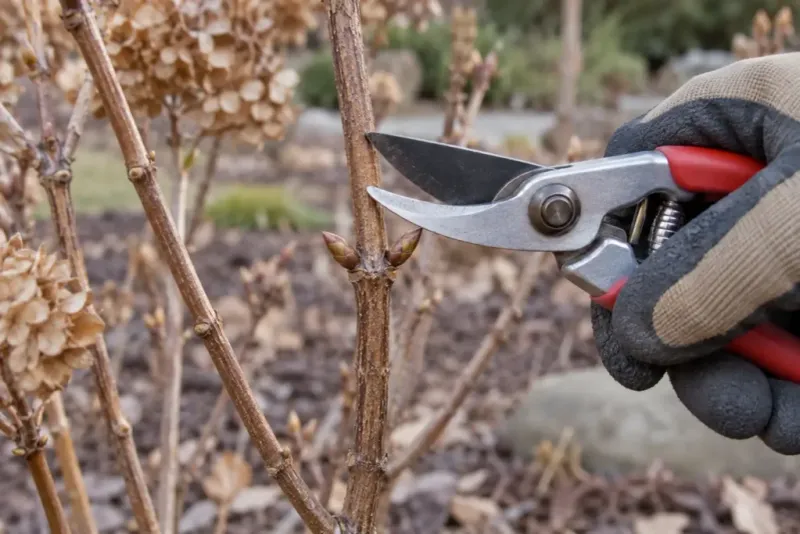
A storm-snapped branch dangling from your shrub is one of the few things worth cutting this fall. Removing broken, diseased, or rubbing stems helps the plant without touching the healthy buds you want to keep.
Make each cut just below the damaged area, ideally right above a healthy pair of buds on the stem. Clean, sharp bypass pruners make smooth cuts that heal faster than the ragged tears left by dull blades.
Wiping your blades with a household disinfectant between plants helps reduce the spread of disease, especially after cutting diseased stems. Fallen leaves with heavy spotting are also worth raking up, since fungal spores can survive the winter in them.
Stems that look brown and brittle in October may still be alive, so give them a quick check. Scratch the bark lightly with a fingernail, and green tissue underneath means the stem is healthy and should stay.
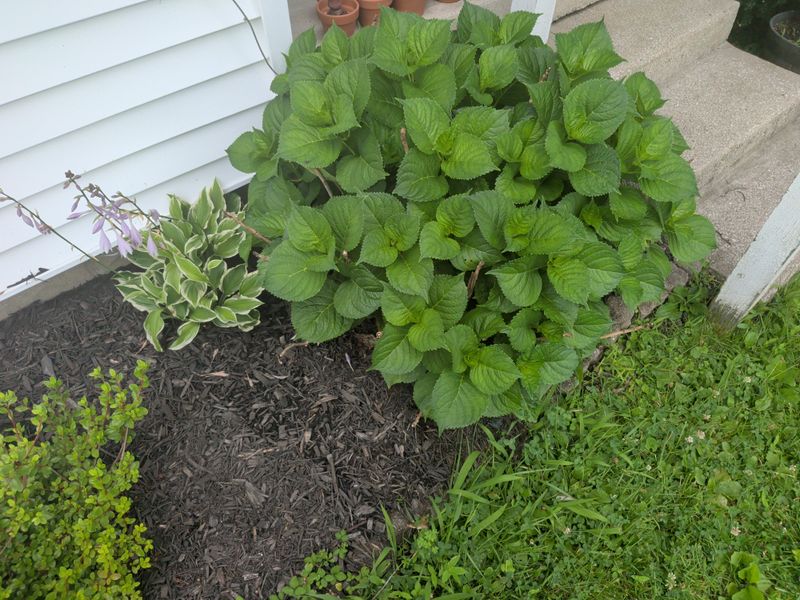
Many old wood hydrangeas look rough after their first frost, with limp leaves and drooping tips. That messy look is normal fall behavior, and it does not mean the shrub needs a big cleanup.
Saving the real shaping work for the right season keeps your fall chores short and your flower buds safe. For bigleaf types that means summer after bloom, and for panicle types it means late winter.
A light touch now also lets you see the full shape of the shrub once the leaves drop. Bare branches make it easy to spot crossing stems that you can plan to remove next season.
© Reddit
A fall trim leaves buds more exposed to winter cold, so protection matters even more after any cutting. In USDA zones 5 and 6, harsh winters can damage the flower buds even on shrubs that went unpruned.
A layer of shredded bark or chopped leaves about two to four inches deep helps keep soil temperatures steady. Spread it after the ground cools in late fall, and keep it a few inches away from the stems.
Some gardeners in cold areas build a simple cage of chicken wire around the shrub and fill it with leaves. Dry oak leaves work well because they stay fluffy, which traps air and shields the stems from biting wind.
Burlap wraps can also help, but avoid plastic because it traps moisture and heat on sunny winter days. Remove any covers in early spring once the hardest freezes pass, so the buds can wake up naturally.
Watering deeply before the ground freezes is another helpful step, especially after a dry autumn in your area. Well-hydrated stems handle cold better than thirsty ones, and hydrangeas are known for needing plenty of water.
Late spring frosts can still nip swelling buds, so keep an old sheet handy for chilly April nights. Draping it over the shrub in the evening and removing it the next morning can save a season of flowers.
A little fall care like this turns a risky winter into a much better chance at summer blooms. Tuck your shrubs in now, and next July you may find yourself counting flower heads instead of leaves.
The post Fall Hydrangea Pruning Mistakes That Cost You Next Year’s Flowers appeared first on Positivebloom.
I like how the papery flower heads hang on through winter, slowly fading from pink or blue to tan. Some gardeners leave those old blooms on to shield the tender buds below from cold and wind, though research on the benefit is limited.
Not every type follows the same schedule, because some kinds form their flowers on fresh spring growth instead. You need to know which kind you planted before you reach for the pruners this October.
I believe many flowerless summers start with a tidy gardener who simply wanted the yard to look neat. So who would guess that the messy shrub in the corner is often the one that blooms best?
1. Cutting Bigleaf Hydrangeas After Buds Have Already Set
Bigleaf hydrangeas, known to scientists as Hydrangea macrophylla, set their flower buds for next year in late summer. By October, those buds sit quietly at the ends of the stems, waiting for warm weather to return.
That timing explains the biggest fall pruning mistake gardeners make with these popular shrubs across much of the country. Cutting the stems back now removes the buds, so the plant grows leaves next summer but few flowers.
Gardeners call this habit blooming on old wood, which means flowers come from stems that grew the previous year. Oakleaf and mountain hydrangeas follow the same pattern, so they also need protection from an eager fall trim.
You can often spot the swollen buds by gently pulling back the top pair of leaves on a stem. They look plump and green or reddish, and they hold the tiny flower parts for next summer.
Many university extension services suggest pruning these shrubs right after they finish blooming in summer, not in autumn. That window gives new stems enough time to grow and form buds before cold weather arrives in fall.
Reblooming types like Endless Summer can flower on both old and new stems, which offers a little backup. Even so, a heavy fall cut on those shrubs often delays the first flush of blooms by several weeks.
So the simplest fall plan for bigleaf hydrangeas is to admire them and keep your pruners in the shed. Your patience this month pays off with big, colorful flower clusters when next summer finally rolls around.
2. Trimming Without Knowing Your Hydrangea Type
© Simple Garden Life
A friend once proudly showed me her neatly trimmed hydrangea row, and the next July it held only leaves. She had treated every shrub the same way, even though her yard held two very different kinds.
Panicle hydrangeas and smooth hydrangeas, such as the classic Annabelle, form their flowers on stems that grow each spring. Bigleaf, oakleaf, mountain, and climbing hydrangeas mostly bloom on older stems that formed buds the previous year.
The plant tag is the easiest clue, so check it for a Latin name before making any cuts. Look for words like macrophylla, quercifolia, serrata, paniculata, or arborescens printed somewhere on the small plastic label.
If the tag is long gone, you can still identify the shrub by studying its leaves and flowers. Oakleaf types have large lobed leaves that turn deep red in fall, much like the leaves of an oak tree.
Panicle hydrangeas carry cone-shaped flower heads, while bigleaf types usually show round mopheads or flat lacecap clusters. Smooth hydrangeas often have thinner, heart-shaped leaves and big white or pale green ball-shaped blooms in early summer.
Knowing the type tells you whether fall pruning is a small issue or a serious threat to next year’s flowers. Snap a few photos and jot down notes now, while the leaves and dried blooms are still easy to see.
Many county extension offices will help identify a mystery shrub if you bring in a clear photo or leaf sample. That quick visit can save you from guessing wrong and losing a full summer of blooms.
3. Snipping Off Faded Flower Heads Too Early
Those crispy, tan flower heads might look a little scruffy, but they are doing quiet work on your shrub. Many gardeners snip them off in fall to tidy up, and that habit can cost bigleaf types their buds.
On mophead hydrangeas, the next year’s flower buds often sit just below the old bloom on the same stem. A careless cut that removes too much stem can take those buds right along with the faded flower.
Several extension services suggest leaving the dried heads in place through winter for a little extra protection. The evidence for strong frost shielding is limited, but leaving them rarely causes harm and costs nothing.
Those papery blooms also catch snow and frost, which adds pretty texture to a quiet winter garden. Some gardeners even cut a few for dried arrangements, taking only a short piece of stem with each one.
If you want to remove spent blooms, wait until early spring when you can clearly see the swelling buds. Then cut just above the first healthy pair of buds below each old flower head, and stop there.
Panicle and smooth hydrangea heads can stay too, since those shrubs bloom on new growth anyway. Their sturdy, upright flower clusters often look striking against a gray winter sky or a dusting of snow.
Leaving the heads in place gives you a rest from yard chores during the busy fall cleanup season. Leaving the heads in place gives you a rest from yard chores during the busy fall cleanup season. You also get one less job on your October list.
4. Giving Old Wood Shrubs A Hard Fall Haircut
Ever wonder why a shrub cut to knee height in October comes back lush but bloomless the next summer? Old wood hydrangeas lose every bud on the stems you remove, and they cannot replace those buds before spring.
Cutting bigleaf, oakleaf, or mountain hydrangeas down to the ground is one of the costliest fall mistakes. The shrubs usually survive and regrow, but the new stems often stay green without flowers for a full season.
Fresh cuts in fall can also trigger a flush of soft new growth if the weather stays mild. That tender growth may not harden off in time, so the first hard freeze can damage it.
Shrubs that look too big for their space are a common reason gardeners reach for the loppers. A better plan is to remove a few of the oldest stems at the base right after summer flowering.
Many extension guides suggest taking out no more than one third of the oldest stems in a single year. That slow approach shrinks the shrub over time while leaving plenty of budded stems to flower next summer.
If size is a constant struggle, the shrub may simply be planted in the wrong spot for its mature width. Fall is actually a fine time to move it, since cooler weather helps roots settle into new soil.
Compact varieties bred to stay small can also replace an oversized shrub without any need for heavy yearly pruning. Your future self will thank you every July when the flowers show up without any extra effort.
5. Pairing Fall Pruning With Late Feeding
Fertilizer works like a green light for growth, and hydrangeas follow that signal even late in the year. Feeding shrubs in September or October can push out soft new shoots right when they should be slowing down.
That fresh growth has thin cell walls and little time to toughen up before the first freeze arrives. Cold damage on those shoots can reach down into the stems where next summer’s flower buds are waiting.
Pruning and feeding mistakes often go together, because both send the same message to keep growing now. A shrub that gets trimmed and fed in fall faces a higher risk of winter injury to its buds.
Most extension services suggest feeding hydrangeas in spring, with a possible light second feeding in early summer. Many recommend stopping fertilizer by about midsummer so the shrubs have time to harden off before cold weather.
Hydrangeas also tend to grow big leaves at the expense of flowers when they get too much nitrogen. A slow-release, balanced product used sparingly in spring usually gives them all the food they need.
Soil amendments meant to change bloom color, like garden sulfur or lime, follow different rules than fertilizer does. These materials work slowly, so fall is a reasonable time to add them after a soil test.
Put the fertilizer bag away for the season and let your shrubs settle into their natural fall slowdown. Come spring, you can feed them with confidence once the buds begin to swell and leaves unfold.
6. Cutting Back Panicle Hydrangeas Too Early In Fall
Panicle hydrangeas like Limelight and smooth types like Annabelle are the forgiving members of the family. Since they bloom on new spring stems, a fall trim rarely costs you flowers the way it does with bigleafs.
Even so, most extension services suggest waiting until late winter or early spring to prune these shrubs. Late pruning lets you see winter damage clearly and cut back to strong, healthy buds before growth starts.
Fall cuts also leave open wounds through the coldest months, which can lead to browned stem tips by spring. Waiting a few months means the cuts heal quickly once the shrub wakes up and starts pushing new shoots.
The tall, cone-shaped flower heads on panicle hydrangeas also bring welcome structure to a bare winter yard. Many gardeners enjoy watching them shift from creamy white to rosy pink and then soft tan through autumn.
Smooth hydrangeas can handle a hard cut in late winter, often down to about one or two feet tall. Some gardeners leave taller stems instead, since very hard cuts can produce floppy stems that bend under heavy blooms.
Panicle types usually respond best to cutting back about one third of their height in late winter. Thicker stems left behind help support the heavy cone-shaped flowers, so the shrub stays upright after summer rain.
Mark your calendar for February or March, depending on your region, and enjoy a relaxed autumn instead. Your panicle shrubs will reward that patience with sturdy stems and plenty of big blooms next summer.
7. Removing Healthy Stems Instead Of Only Broken Ones
© Garden Insider
A storm-snapped branch dangling from your shrub is one of the few things worth cutting this fall. Removing broken, diseased, or rubbing stems helps the plant without touching the healthy buds you want to keep.
Make each cut just below the damaged area, ideally right above a healthy pair of buds on the stem. Clean, sharp bypass pruners make smooth cuts that heal faster than the ragged tears left by dull blades.
Wiping your blades with a household disinfectant between plants helps reduce the spread of disease, especially after cutting diseased stems. Fallen leaves with heavy spotting are also worth raking up, since fungal spores can survive the winter in them.
Stems that look brown and brittle in October may still be alive, so give them a quick check. Scratch the bark lightly with a fingernail, and green tissue underneath means the stem is healthy and should stay.
Many old wood hydrangeas look rough after their first frost, with limp leaves and drooping tips. That messy look is normal fall behavior, and it does not mean the shrub needs a big cleanup.
Saving the real shaping work for the right season keeps your fall chores short and your flower buds safe. For bigleaf types that means summer after bloom, and for panicle types it means late winter.
A light touch now also lets you see the full shape of the shrub once the leaves drop. Bare branches make it easy to spot crossing stems that you can plan to remove next season.
8. Skipping Winter Protection After Fall Pruning
A fall trim leaves buds more exposed to winter cold, so protection matters even more after any cutting. In USDA zones 5 and 6, harsh winters can damage the flower buds even on shrubs that went unpruned.
A layer of shredded bark or chopped leaves about two to four inches deep helps keep soil temperatures steady. Spread it after the ground cools in late fall, and keep it a few inches away from the stems.
Some gardeners in cold areas build a simple cage of chicken wire around the shrub and fill it with leaves. Dry oak leaves work well because they stay fluffy, which traps air and shields the stems from biting wind.
Burlap wraps can also help, but avoid plastic because it traps moisture and heat on sunny winter days. Remove any covers in early spring once the hardest freezes pass, so the buds can wake up naturally.
Watering deeply before the ground freezes is another helpful step, especially after a dry autumn in your area. Well-hydrated stems handle cold better than thirsty ones, and hydrangeas are known for needing plenty of water.
Late spring frosts can still nip swelling buds, so keep an old sheet handy for chilly April nights. Draping it over the shrub in the evening and removing it the next morning can save a season of flowers.
A little fall care like this turns a risky winter into a much better chance at summer blooms. Tuck your shrubs in now, and next July you may find yourself counting flower heads instead of leaves.
The post Fall Hydrangea Pruning Mistakes That Cost You Next Year’s Flowers appeared first on Positivebloom.