
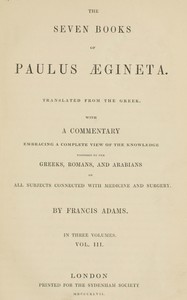
The seven books of Paulus Ægineta, volume 3 (of 3) : translated from the…
Let's be clear: this is not a novel. There's no plot twist on page 42. "The Seven Books of Paulus Ægineta" is a massive medical encyclopedia from the 7th century, and this third volume is where things get... hands-on. Think of it as the final, practical exam after the first two volumes covered theory and general medicine.
The Story
There's no narrative arc, but there is a journey. This volume dives into the gritty specifics of surgery and specialized treatments. Paul, a Greek physician living under Arab rule, acts as a compiler. He gathers knowledge from giants like Galen and Hippocrates, filters it through his own experience, and lays it out step-by-step. You'll move from chapters on how to treat wounds and fractures, to detailed guides on removing bladder stones or performing cataract surgery (yes, really). It's a systematic walkthrough of every major surgical procedure known to the late ancient world. The 'story' is the unfolding of medical logic, problem by problem, with solutions ranging from the remarkably sensible to the head-scratchingly strange.
Why You Should Read It
I found this absolutely fascinating for two reasons. First, the sheer humanity of it. You feel the urgency in his writing—the need to fix what's broken. When he describes setting a compound fracture, you can almost see the focus and the steady hands required. Second, it completely shatters our modern arrogance. We see the roots of our medical science being laid down, often correctly, over 1300 years ago. But we also see the stark limitations. The blend of sharp observation and superstitious belief is humbling. It makes you appreciate every sterile bandage and painkiller we have today.
Final Verdict
This is a niche read, but a rewarding one. It's perfect for history buffs, especially those interested in medicine, science, or the ancient world. If you've ever enjoyed a medical drama or wondered how people survived before modern hospitals, this is the original source material. It's also great for writers looking for authentic period details. Just don't expect a page-turner in the usual sense. Expect a time capsule, a manual from a brilliant mind doing his absolute best with the tools he had. It's a slow, thoughtful read that will change how you see a scratch on your arm or a broken bone.
You are viewing a work that belongs to the global public domain. Enjoy reading and sharing without restrictions.





Kenneth Anderson
5 months agoThis is one of those stories where the author's voice is distinct and makes complex topics easy to digest. Exactly what I needed.